
Alphabet Tracing Worksheets: How to Teach Letter Formation Step by Step
By Sadia Afrin, Early Childhood Educator · 5 min read
Most kids can sing the alphabet long before they can write it. Here's a simple step-by-step way to teach letter formation.
Most kids can sing the alphabet long before they can write a single letter. The gap in between is letter formation: learning where each letter starts, which way the pencil moves and where it stops. Tracing worksheets are one of the best tools for closing that gap, as long as they are used well. Here is a simple step-by-step way to use them at home or in the classroom.
Step 1: Get the setup right
Before any letters, check three things:
- Seat height. Feet flat on the floor, elbows roughly level with the table.
- Paper position. Slightly tilted, held steady by the non-writing hand.
- Pencil grip. A chunky pencil or short crayon makes it easier for small hands to find a comfortable grip. Don't stress about a perfect grip at age three.
Step 2: Use your finger first
Before picking up a pencil, let your child trace the big letter with a finger. Say the direction out loud: "Start at the top, go down, lift, across." This builds the movement pattern without the pressure of staying on the line.
Step 3: Follow the numbered starting points
Good tracing sheets show a start dot and arrows. Starting in the right place matters more than a neat result, because habits formed now are hard to change later. In My ABC Adventure, every capital and small letter has numbered start points so children can see exactly where to begin.
Step 4: Trace, then write beside it
Move from tracing the large outline, to tracing dotted letters on the line, to writing the letter freehand next to your model. Don't rush this. Three or four good letters beat a full row of rushed ones.
Step 5: Keep sessions short
Five to ten minutes is plenty for preschoolers. One letter, one colouring task, done. Stop while it is still fun.
Letters to teach first
Many teachers start with letters made of simple lines and curves, such as c, o, a, l and t, before the tricky ones. A, B and C are a great first set because they cover a diagonal letter, a letter with a straight line and curves, and a letter that is one open curve.
🎁 Free download
Trace the Letters A, B, C
Three sample pages from My ABC Adventure: Ant, Bilby and Cockatoo. Each has the capital and small letter to trace, a find-and-circle puzzle and an animal to colour.
⬇️ Download free PDFQuick answers
What age should kids start tracing letters?
Most children are ready for simple tracing around age three to four, once they enjoy scribbling and drawing lines. Follow your child's lead.
Capitals or small letters first?
Many families start with capitals because they are easier to form, then add small letters. Check what your child's school uses.
How many letters a week?
Two to three letters a week is a comfortable pace for most preschoolers.
Ready for the whole alphabet?
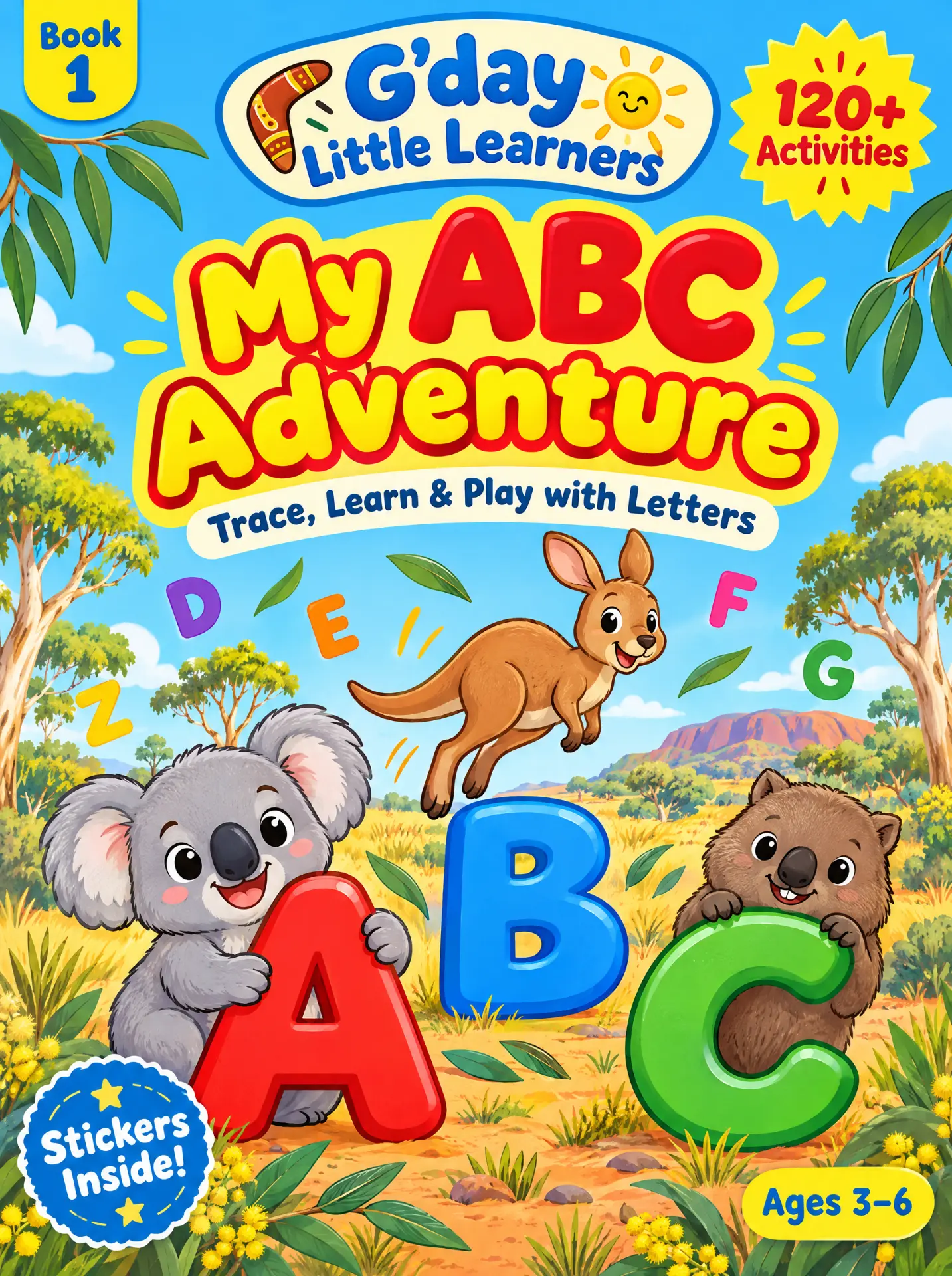
My ABC Adventure has a full page for every letter, with one Australian animal each, plus matching games, missing letters, mazes and a name page. Ages 3–6.
Want 600+ ready-to-print activities like these?
All five G'day Little Learners books, instant download.
🛒 Get all 5 books – $39