Puzzles for Preschoolers: The Best Types for Ages 3–6
By Sadia Afrin, Early Childhood Educator · 5 min read
Puzzles teach children to look closely, try again and solve problems. Here are the best types for ages 3 to 6.
Puzzles are one of the best screen-free activities for young children. They build focus, patience and problem-solving, and they feel like play. Here are the main types and what each one offers.
Jigsaw puzzles
Start with chunky puzzles of 4 to 12 pieces and move to 24 as your child gets confident. Puzzles with a frame or a picture to copy are easiest.
Matching and memory games
Matching pairs builds visual memory and attention. Start with a few pairs and add more.
Mazes and path puzzles
Mazes build planning and pencil control. Begin with wide paths and short routes.
Pattern puzzles
What comes next? Pattern puzzles build early maths thinking.
Spot the difference and hidden pictures
These teach children to look carefully and compare.
Sorting and odd one out
Sorting by colour, shape or group builds categories and logic.
How to choose
- Pick puzzles that are just challenging enough, not frustrating.
- Start easy so your child feels success.
- Mix types so they keep learning new skills.
- Sit with them at first, then let them try alone.
Helping when they get stuck
Ask questions instead of giving the answer: Where could this piece go? What do you notice? If they are upset, put it away and try again tomorrow.
Think & Play Puzzles has matching, mazes, spot the difference, shapes, colours and patterns in one book for ages 3 to 6.
🎁 Free download
Puzzle Types Checklist
A one-page A4 checklist of 12 puzzle types to try, from jigsaws and mazes to patterns and spot the difference.
⬇️ Download free PDF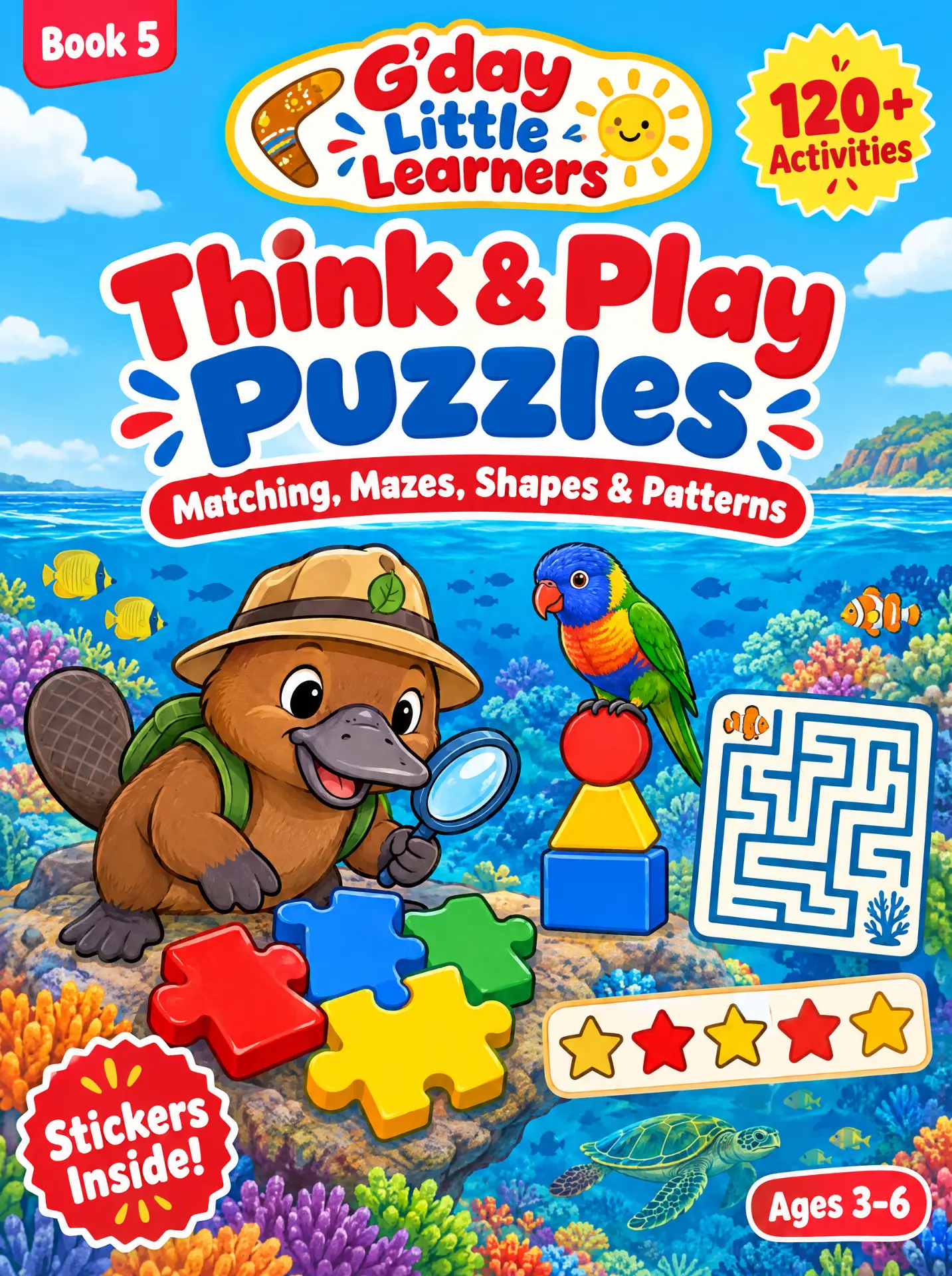
Ready for puzzles and thinking games?
Think & Play Puzzles has matching, mazes, spot the difference, shapes, colours and patterns for ages 3–6.
Want 600+ ready-to-print activities like these?
All five G'day Little Learners books, instant download.
🛒 Get all 5 books – $39